The True Value of a Site Capacity Study
A site capacity study can reveal what’s possible on a property. The real question is how those findings shape the work that follows.



A site can look promising at first glance.
The acreage may seem right. The location may feel strong. The zoning may appear to allow the use. A developer may already have a target use, building size, parking ratio, or project model in mind.
Those early assumptions only go so far.
That’s where a site capacity study comes in. Through early test fits and planning studies, it helps reduce risk by showing what a property can realistically accommodate before making a larger investment in the project.
But the study is only the starting point.
What matters most is how those findings are put into action. Here’s what developers should know about the true value of a site capacity study.

1. Start With the Business Question
Most projects begin with a practical goal.
A developer of multi-family housing may need a certain number of units to make the project viable. Industrial projects may need to strike the right balance of building area, truck movement, and site logistics. Automotive dealerships may be working around factory requirements, service capacity, display space, and inventory.
Can this site really achieve the owner's goals?
A site capacity study helps answer that question early. It looks at the physical and practical factors that shape a project, including density, parking, access, utilities, jurisdictional expectations, and long-term use.
The purpose is not to solve every design decision right away. It is to understand enough about the site to know whether the land is usable for development and what risks may stand in the way.
A site capacity study does not always confirm the original idea. Sometimes it confirms the direction. Sometimes it shows that the plan needs to shift. And sometimes it reveals that the risk may outweigh the return, that the site does not support the desired density.
Regardless of the outcome, the site capacity study quickly delivers the parameters for the business owner or developer to make a highly informed decision on whether a site is viable or not.
2. Every Line on a Site Plan Has Value
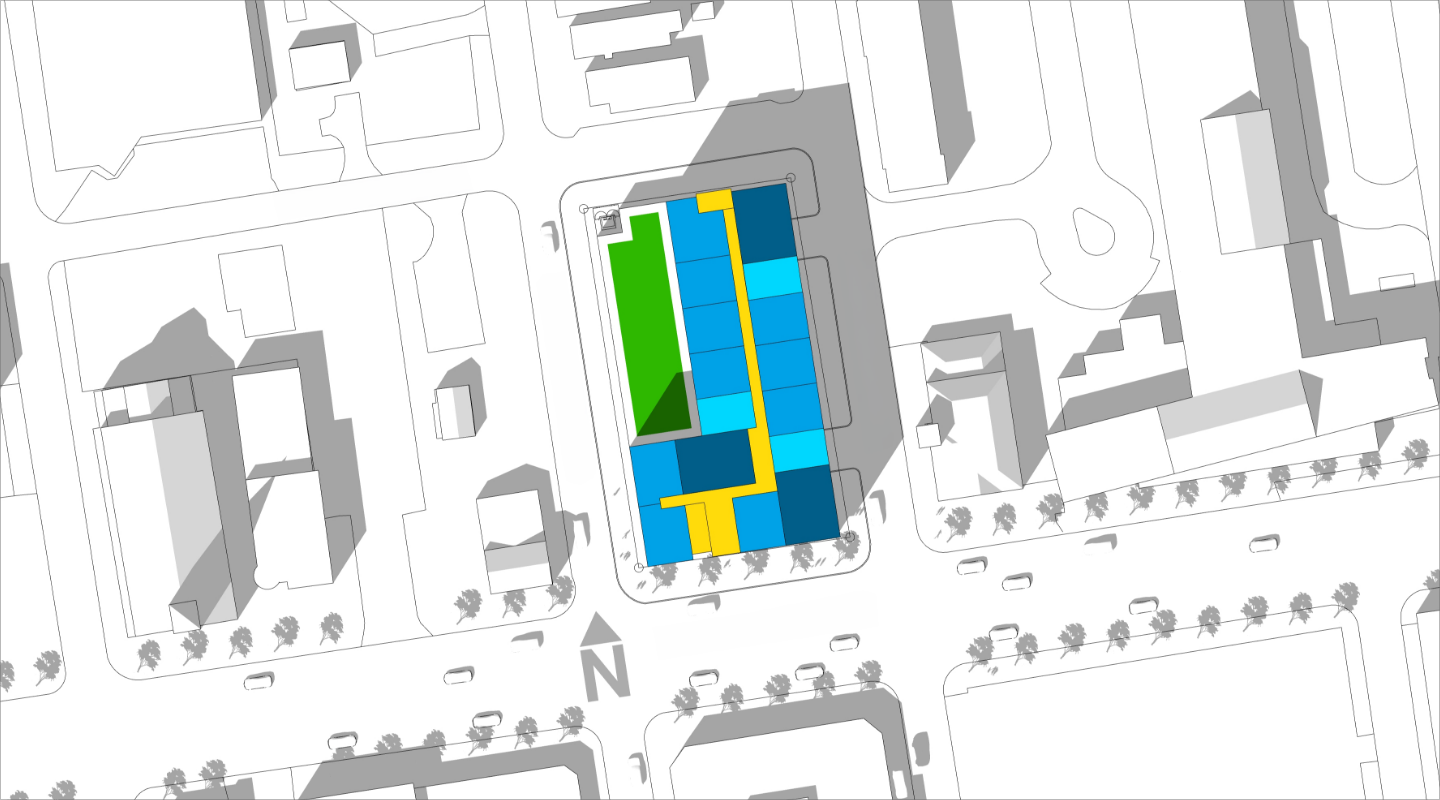
A layout can work on paper and still overlook the conditions that shape how a property can actually be developed.
Site constraints inform risks and rewards by changing what is realistic for the property. Some are obvious from the start, while others only become clear once the property is studied more closely through a site capacity study.
An early layout may show that the desired building area or development yield fits within the property. But the site itself may tell a different story.
Understanding the natural contours of a site can reveal drainage patterns, optimal sight lines, or even present desired building locations for cost-effective construction, i.e., reducing the amount of retaining walls or stepped foundations needed, which can reduce potential build-costs.
Existing access points and traffic patterns can influence not only where buildings could be located, but can help enhance the entry sequence of the site, thus thinking about potential marketing and branding of the development upfront, not as an after-thought.
The shape of the property, layered with setbacks, protection zones, and utility easements may limit how the plan can be arranged.
Those conditions affect more than whether the pieces fit. They shape how people arrive, move through the property, and experience the development. A plan may achieve the target numbers while creating awkward circulation or leaving little room for meaningful open space.
And not every site constraint stops at the property line. The surrounding roads, neighboring uses, and available utility connections can also influence how the site functions. A layout may look efficient within the parcel while overlooking conditions that make it harder to carry forward.
Constraints can also carry larger project implications. They may require additional grading and infrastructure work or raise issues that need to be resolved during approvals. In some cases, they can affect the schedule or change how much of the original plan remains realistic.
Recognizing those conditions is one part of the study. Knowing how the plan should respond is where deeper problem-solving begins.
3. Experience Turns Site Constraints Into Project Opportunities
Identifying constraints is only the beginning of a site capacity study. The real work is understanding what that condition changes across the rest of the project.
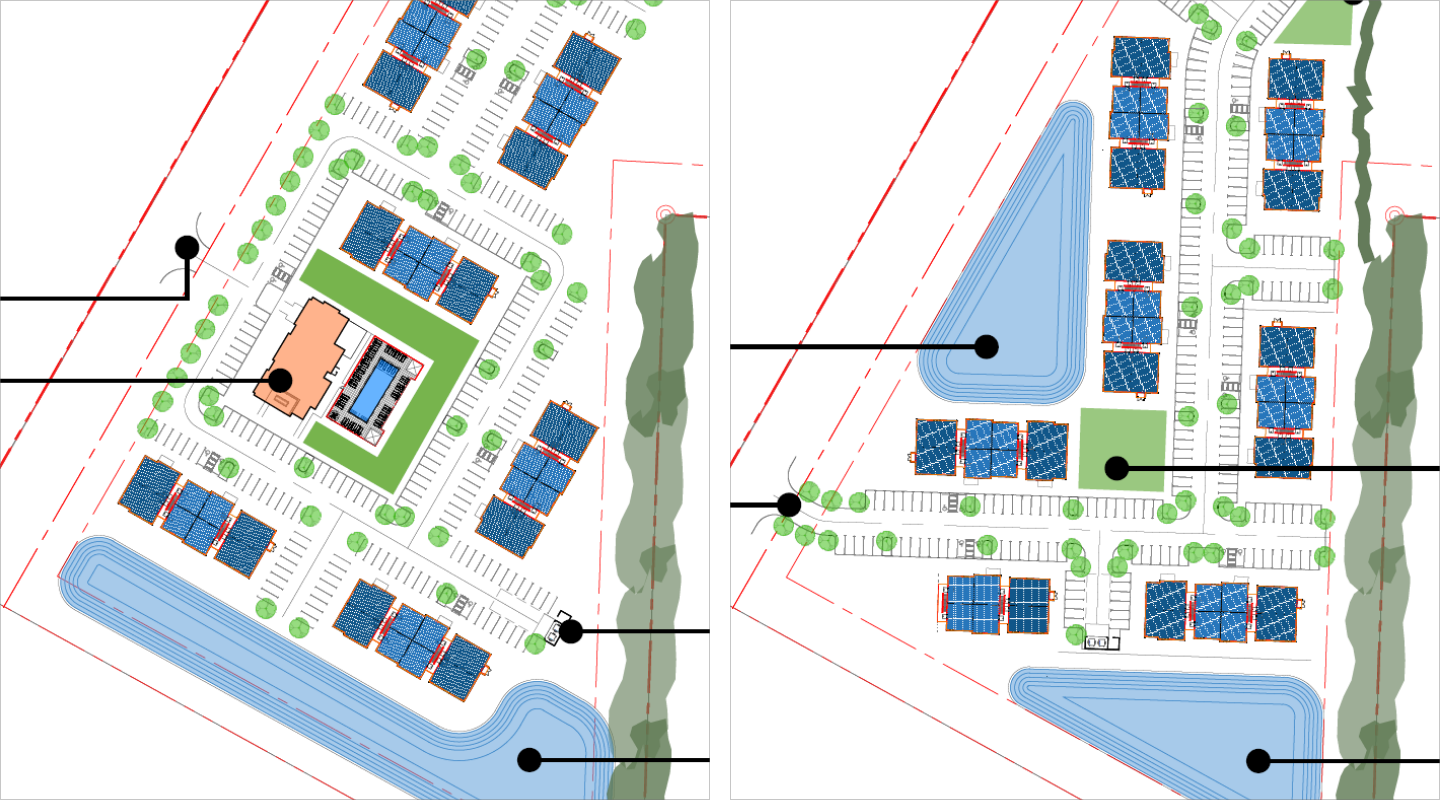
On a recent multi-family study, significant elevation changes made the original layout difficult to carry forward. The requested unit count had been achieved, but the plan did not fully account for how the development would sit on the land.
At that point, the study moves from layout to problem-solving.
The team focused their attention on the natural contours of the site, shifting building footprints that worked with, not against them. This one adjustment changed the whole direction of the site, resulting in fewer building types, more dwelling units, and a stronger street presence and brand identity.
On another project, changing the building configuration allowed the team to preserve the overall unit count while improving emergency access. It also created a better phasing strategy, bringing completed portions of the development online, generating revenue sooner.
Real experience shows up in how to adapt. The strongest solution is not always the first layout that fits. It is the plan that protects the project goal while responding intelligently to the site.

4. Local Context Shapes What's Possible
A development idea does not land the same way in every community.
An urban infill site may support greater density because of what surrounds it. A suburban property may offer more land while bringing different expectations around scale, product type, and neighborhood fit.
That's where local knowledge matters.
For developers entering the Columbus market from another region, the right strategy is not always a direct copy of what worked somewhere else. A product type that makes sense in Texas or Florida may need to shift for Central Ohio. The local market may call for a different scale, development pattern, or approach to the site.
Jurisdictions can vary just as much. Approval paths, infrastructure priorities, and attitudes toward growth can all shape what is realistic for a property.
For archall architects, that perspective comes from studying sites across Central Ohio and working with different developers, owners, and communities. There is no single formula that applies everywhere.
That is why a site capacity study should account for more than the parcel itself.
Often, the surrounding context and neighborhood beyond the site’s property lines provide clues and opportunities to impact the design and layout within those same property lines. It should also consider whether the development fits the market and the community around it.
It is this understanding of the local context, beyond the site, that is crucial to the success of a site capacity study.
.jpg)
Final Thoughts // From Study To Strategy
At its core, a site capacity study helps connect a development idea to the realities of the property. But that's only the first step.
The real work comes through interpretation. Understanding what the findings mean, how one decision affects another, and how the plan should respond.
Most importantly, developers need a partner who can carry that early understanding into design decisions that work for the land and support their goals. Let’s prove that the site works for you, first and foremost... then, let’s have fun designing what it looks like together.
That is the true value of a site capacity study.
If you have a site that needs evaluating, you need a partner who understands both design and development in Central Ohio and beyond. We're ready to work with you.
Share this story